Continuing Education

Engaging Vitality: Fundamentals Program in 3 Modules

29.01. - 30.04.2028

Engaging Vitality combines the fundamentals of classical acupuncture literature and internal alchemy (Nei Dan) with precise osteopathic palpation techniques. Developed by Dan Bensky and Charles Chace, this approach builds on traditional practice by introducing subtle diagnostic tools that enable practitioners to perceive tissue structures and energetic dynamics with precision. This enables practitioners to enhance their diagnostic precision and develop more targeted, efficient treatment plans.

CHF 1'950.00

  • *Sind Sie Alumni oder Student:In? / Are you graduate or student?
  • Date

    29.01. - 30.04.2028

  • Day & Time

    Module 1: 29.-30. Jan 2028 - 09:00 - 17:00
    Module 2: 18.-19. Mar 2028 - 09:00 - 17:00
    Module 3: 28.-30. April 2028 - 09:00 - 17:00

  • Hours

    49 hours

  • Type of education
    • in-person class
  • Teacher
    • Ferdinand Beck
    • Felix de Haas
  • Language

    English

  • Number of participants

    -

  • Recognition TCM Fachverband

    Label No. follows

  • ASA-Credits

    49

About this course

A new approach to acupuncture pivoting around palpation with classical roots 

Engaging Vitality is based on several pillars including the classical medical acupuncture literature, osteopathic palpation techniques, and internal alchemy (Nei Dan). This approach was developed by Dan Bensky and Charles Chace, both prominent figures in acupuncture and Chinese herbal medicine. They are teachers and practitioners with extensive clinical experience combined with deep knowledge of classical Chinese medical texts.

Engaging Vitality is an approach to acupuncture that will greatly expand your range of diagnostic skills and treatment techniques. You will learn a range of palpation techniques derived from osteopathy and practices in East Asian Medicine. Your treatments will become a lot more efficient since you learn to identify the energetic and structural issues more clearly. On one hand, it is deeply rooted in classical tradition, while on the other, it is enhanced with new tools.

What is Engaging Vitality? 

Engaging Vitality is an approach that can provide depth and breadth to anyone who has studied acupuncture. It emphasizes a hands-on practice, allowing the practitioner to quickly integrate the learned techniques into their own clinic. It is an approach not based on a fixed protocol like most acupuncture schools. This gives every practitioner the freedom to integrate the material in their own way.

Important aspects of Engaging Vitality include:

  • Learning to directly feel the Qi through palpation. This is a diagnostic method you can use alongside the pulse, tongue observation, or hara (abdomen) palpation, etc. Information that you may miss through conventional methods can be obtained this way, making it an invaluable diagnostic tool. It also provides you with immediate feedback during treatment.
  • Learning to feel different rhythms, which are derived from osteopathy but interpreted in the context of acupuncture. This gives you a more accurate picture of the various manifestations of Qi, such as Yang Qi, Yin Qi and the „Fluid body,“ etc. These rhythms can also help you determine where restrictions in the body are located. Other techniques you will learn, such as “global and local listening,“ can enable you to accurately pinpoint the location of restrictions. Resolving restrictions in the body is of vital importance, since opening those is a requisite for initiating the self-healing process in the body.
  • You will also learn to integrate the biomedical anatomical map and the Chinese acupuncture map, allowing you to perceive restrictions in the system much more accurately.
  • Learning to optimally use needling techniques. Unlike a more mechanical approach in modern acupuncture, Engaging Vitality places much emphasis on the technique of needling. There is attention to both the physical and mental posture during needling, making an acupuncture treatment significantly more effective. You will learn to achieve much more with fewer needles.
  • Learning to use Manual Thermal Diagnostics (a technique originally developed by Jean Pierre Barral), enabling the practitioner to gather a lot of diagnostic information based on differences in heat sensation and/or air pressure. This can also assist in point location on the channels.
  • An approach to the Extraordinary Vessels based on the interpretation of Li Shizhen, one of the greatest doctors in Chinese medicine. Here, knowledge from the acupuncture tradition is combined with the Nei Dan (internal alchemy) tradition, resulting in a much broader understanding of the Extraordinary Vessels, thereby significantly increasing therapeutic possibilities.
  • Listening to the meridians; this technique teaches us how to determine whether a meridian is open or blocked, knowledge that is crucial in choosing which meridians to treat.
  • Integration of all aspects of acupuncture such as the primary meridians, luo vessels, tendino-muscular meridians, divergent meridians, and the extraordinary vessels.

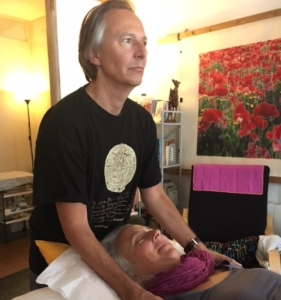
These are only a few of the entire range of topics and techniques covered during the fundamentals course of Engaging Vitality.

Once the three fundamental modules are completed, there is the possibility to follow advanced modules. The fundamental modules form the foundation of the Engaging Vitality Program.

Learning Objectives: 

  • You will learn to come into direct contact with your patient’s Qi and perceive different qualities of Qi. This way, you will receive more precise information than typically obtained through only pulse, tongue, and/or hara diagnostics.
  • You will learn to feel and interpret different manifestations of Qi.
  • You will learn to feel and accurately localize blockages.
  • You will learn to precisely locate (living) acupuncture points.
  • You will learn to needle in a much more profound and more effective way.
  • By interpreting all diagnostic information, you will also learn which approach and dosage best fit a specific treatment. This information will also provide feedback so that you can anticipate and adjust your treatment during a session.
  • You will develop a deeper understanding of Chinese medicine and learn to apply this knowledge in your practice. You will also learn to integrate and optimally utilize all previously acquired knowledge about acupuncture.
  • You will learn to „listen“ with your hands. One of the key characteristics of Engaging Vitality is developing the ability to feel with your hands.
  • You will learn to work without a protocol, following the patient’s inherent treatment plan.

The workshops are structured to include a lot of practical work. We work in small groups with direct feedback from instructors and table trainers.

Content of the Fundamental Modules

Module 1 – Instructor: Ferdinand Beck

  • Shape of the Qi
  • Shape of the Needle Introduction
  • Qi Signal Assessment
  • Yang Rhythm
  • Channel Listening

Module 2 – Instructor: Felix de Haas

  • Review Module 1
  • Global listening
  • Local listening
  • Shape of the Needle continued
  • Channel listening in different ways

Module 3 – Instructor: Felix de Haas

  • Review Module 1 and Module 2
  • Fluid Body and Yin Rhythm
  • Feeling the Qi Jing Ba Mai (extraordinary vessels) via the fluids (based on the morphology developed by Li Shizen and elaborated on by Charles Chace)

Order of the subjects taught might slightly differ in real time class, but all these topics will be covered.

All Fundamental Modules need to be taken. Sequential modules cannot be taken without having taken part in the previous module.

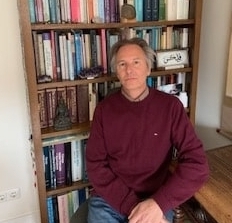
Felix de Haas

Felix de Haas

Referent

Acupuncturist and herbalist with over 35 years of clinical experience. He has studied various styles of acupuncture, including Chinese and Japanese forms. He has also delved into the underlying Chinese philosophy and the history of Chinese Medicine. Additionally, he has studied other traditional Asian healing methods and philosophies. Since 2011, he has participated in the Engaging Vitality program. Since 2014, he has been a instructor in this approach. Felix de Haas is a co-founder of the professional Chinese Medicine association Zhong. He originally studied at the Academie Ars Medica (1989 Master Degree) and later studied intensively with Francois Ramakers at various schools, including ITM/EUTCM and Ky Lin.
He later followed the Manaka, Toyo Hari, and Toyohari Advanced programs under Stephen Birch and Junko Ida. He has also studied with Japanese masters such as Yanagishita Sensei and Takai Sensei and many other Japanese teachers.
He studied also intensively with Dan Bensky and Charles Chace , resulting in becoming instructor in Engaging Vitality. He also studied the last decade intensively with Volker Scheid.
He has managed to integrate the various styles he has learned with the Engaging Vitality model and applies it in practice. Felix de Haas has a practice in Voorburg and Haarlem.

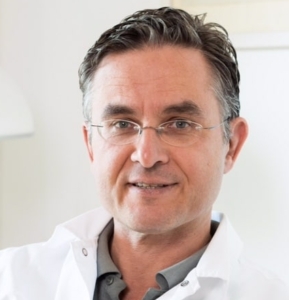
Ferdinand Beck

Ferdinand Beck

Referent

Ferdinand is studying and practicing Chinese Medicine, acupuncture and other related topics since 1995. He spent 8years in China first learning Chinese language, then attending medical university and eventually gaining a medical degree in acupuncture from the renowned Chengdu Universitiy of Traditional Chinese Medicine. At the same time, Ferdinand studied Qigong and Taijiquan with some famous masters, beeing rewarded with a teaching diploma from the Beijing Wu Shu (martial arts) academy. Because of his interest in fine palpation skills and sensory appreciation of qi phenomena, Ferdinand attended the Toyohari basic and advanced trainings with Junko Ida and Steven Birch in Amsterdam. Ferdinand has than been introduced to the Engaging Vitality approach by Charles Chace and Dan Bensky in 2011. He now teaches fundamental and intermediate Engaging Vitality classes and supervises local study groups. The groundbreaking approach of integrating osteopathic palpation into acupuncture practice led him to take a series of classes in osteopathic treatment of the visceral and neural structures, mainly with Jean-Pierre Barral and his students. Ferdinands clinical background now ranges from TCM to Japanese Toyohari acupuncture, as well as visceral and neural manipulation. All incorporated within the Engaging Vitality framework. Ferdinand maintains a private practice near Munich, Germany.

Chiway AG

Unterer Graben 1
8400 Winterthur
Switzerland

+41 52 365 35 43
info@chiway.ch

Impressum | AGB
Datenschutz-Erklärung

Öffnungszeiten

Montag bis Freitag
9.00 – 12.00 & 14.00 – 17.00 Uhr

Newsletter-Ameldung

Chiway AG

Unterer Graben 1
8400 Winterthur
Switzerland

+41 52 365 35 43
info@chiway.ch

Impressum | AGB
Datenschutz-Erklärung

Öffnungszeiten

Montag bis Freitag
9.00 – 12.00 & 14.00 – 17.00 Uhr

Newsletter-Ameldung

1
2
1

Chiway Akademie & Chiway Student Clinic

8400 Winterthur, Unterer Graben 1

» zur Student Clinic-Website
» Standort & Anfahrt

2

Chiway Therapiezentrum

8400 Winterthur, Untertor 1

» zur Website
» Standort & Anfahrt

1
2
1

Chiway Akademie & Chiway Student Clinic

8400 Winterthur, Unterer Graben 1

» zur Student Clinic-Website
» Standort & Anfahrt

2

Chiway Therapiezentrum

8400 Winterthur, Untertor 1

» zur Website
» Standort & Anfahrt